DANIELLAGUNES

PERSONAL RESEARCH STATIONMYCOTUNE / HONEST SQUIGGLE

HARP / ACTIVE RESEARCH / ESP32-C3

A private button
to talk with AI.

Daniel is trying to build a small device you can carry, press, and speak into when you want help from your personal AI. The current plan uses a smaller ESP32-C3 SuperMini, a microphone, one clear button, a visible light, a rechargeable battery, and a custom case.

HARDWAREVOICE AIPRIVACY-FOCUSEDNOT FOR SALE
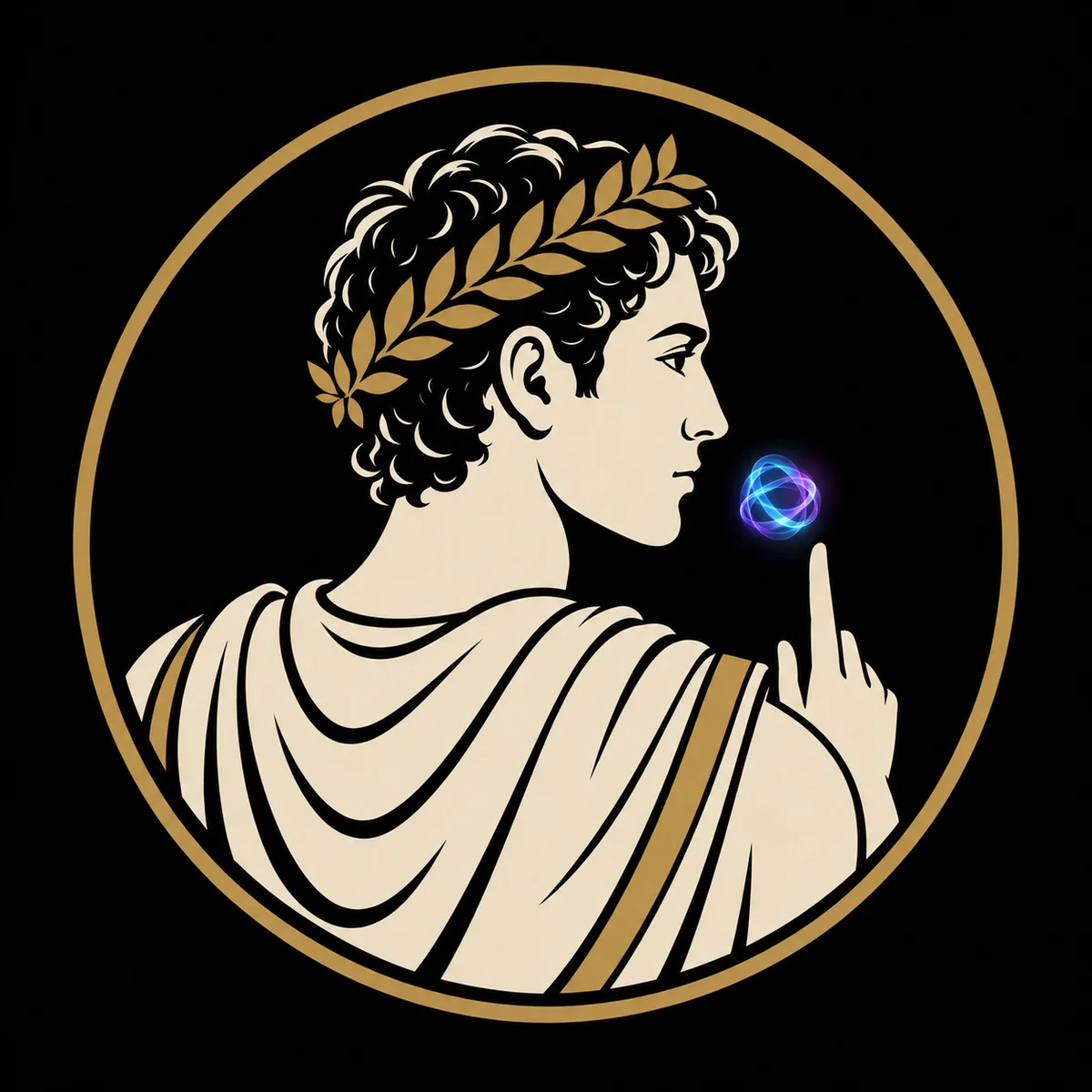
Young adult Harpocrates in profile wearing a gold laurel and ivory cloak, raising one finger beneath a floating voice-interface orb.
INTENTIONAL ACTIVATION / VISIBLE STATE / CONTROLLED BOUNDARY

01 / WHAT DANIEL IS BUILDING

A microphone that listens only when you ask it to.

Most voice assistants live inside a phone or wait in the room for a wake word. Harpocrates starts with something easier to understand: you press a real button, a light shows that the microphone is on, and then you speak.

The small ESP32-C3 board is not the AI. It records your voice and sends it to a phone or private server, where speech-to-text and AI processing can happen. Daniel already owns a larger ESP32-S3 Feather for early desk testing. The smaller C3 board is the proposed wearable version and still needs to be tested.

RIGHT NOW
Choosing parts and planning the first working prototype
SMALLER WEARABLE BOARD
ESP32-C3 SuperMini · proposed
BOARD ALREADY OWNED
Adafruit ESP32-S3 Feather · for early testing
CAN YOU BUY IT?
No. Harpocrates is not a finished product.
RELEASE DATE
None announced

02 / HOW IT CONNECTS TO HERMES

Hermes is the brain. Harpocrates is the thing you hold.

“Harpocrates is the private physical gateway to Hermes.” — Daniel

Hermes handles information, strategy, content, and conversations. Harpocrates is the physical device that lets a person choose when to speak to Hermes. It may eventually connect to other AI services too, so it is more than a Hermes accessory.

YOUPRESS THE BUTTON + SPEAKHARPOCRATESSENDS ONLY AFTER YOU ASKHERMES / ANOTHER AI

03 / WHAT HAPPENS WHEN YOU USE IT

Press the button. Say what you need. Get an answer.

  1. 01You press the physical button when you want the microphone to listen.
  2. 02A visible light tells you that the microphone is active.
  3. 03You speak a request, memo, instruction, or thought.
  4. 04The ESP32-C3 records the audio through its digital microphone.
  5. 05The device sends that recording to a phone or server you chose.
  6. 06That phone or server turns the speech into text and sends it to Hermes or another AI you approved.
  7. 07The answer appears on your phone, computer, or companion app. Audio replies may come later.
  8. 08The light tells you whether the device is listening, sending, working, finished, or having a problem.

04 / PARTS FOR THE FIRST VERSION

What Daniel needs to make one work.

01Smaller wearable target · proposed

ESP32-C3 SuperMini

The newly selected V0 target for button input, audio capture, status-light control, Wi-Fi or Bluetooth communication, firmware, and transmission logic. The exact board, available pins, memory limits, microphone compatibility, and power requirements still need bench verification before purchase.

02SPH0645LM4H · Product 3421 · proposed

I2S MEMS Microphone

A mono digital microphone preferred for the first prototype. Its bottom port requires a correctly aligned acoustic opening in the enclosure. Planning reference: approximately $6.95; recheck before purchase.

REFERENCE PRODUCT ↗
03Exact model undecided

Momentary activation button

A compact GPIO-connected control for waking the device, starting or ending capture, and potentially supporting short, long, or double-press actions.

04Onboard LED if suitable; external RGB light otherwise

Visible status light

The first prototype needs an unmistakable indication whenever the microphone is active. The exact light and GPIO assignment depend on the selected ESP32-C3 SuperMini board and remain undecided.

05Example: Product 1578 · proposed

Protected 3.7V 500mAh LiPo

A protected battery remains the current size target. Because the SuperMini may not provide onboard LiPo charging or regulation, the battery, charger, regulator, connector polarity, and safe power path must be selected and tested together. Runtime has not been tested.

REFERENCE PRODUCT ↗
06Example: Product 805 · final model undecided

Physical slide switch

A breadboard-friendly SPDT switch for prototype power or enable control. The wearable may require a smaller enclosure-mounted version.

REFERENCE PRODUCT ↗
07Present on the proposed SuperMini board

USB-C connection

Intended for firmware flashing, serial debugging, and wired testing. Battery charging through this connector is not assumed and must be verified for the exact board.

08Supporting materials

Prototype interconnect

Breadboard, jumper wires, headers, thin stranded wire, heat-shrink, solder, JST-compatible battery connection, strain relief, and eventually perfboard or a custom interconnect board.

09Not yet designed or printed

Compact enclosure

A pendant, clip, pocket, or lanyard-compatible shell with an exposed button, visible light, aligned microphone opening, accessible USB-C, protected battery, strain relief, and no deceptive hidden-recording appearance.


MINIMUM VIABLE PROTOTYPE

  • ESP32-C3 SuperMini target board
  • I2S microphone
  • Momentary activation button
  • Visible status light
  • Protected 500mAh LiPo with a verified power and charging path
  • Physical slide switch
  • Temporary wiring
  • Simple enclosure after electrical testing

OPTIONAL / FUTURE HARDWARE

  • External RGB status light or ring
  • MicroSD for authorized offline recording
  • Secure element for identity and key storage
  • Haptic motor
  • Speaker or miniature amplifier
  • Second microphone
  • Dedicated mute switch
  • Improved fuel gauge
  • Custom PCB
  • Physical microphone disconnect
  • Charging dock or wearable mount

05 / WHAT EACH PART DOES

The device carries your voice. The AI work happens somewhere else.

YOU PRESS + SPEAKMICROPHONE RECORDSESP32-C3 SENDSYOUR PHONE OR SERVERHERMES / CHOSEN AI

The first Harpocrates will not contain a full AI model. Its job is to record only after a button press, show what it is doing, and send the recording to a phone or server the user approved. That other system can turn speech into text, ask the AI for help, and return the answer.

06 / THE PRIVACY RULES

The goal: quiet until you press the button.

These are rules Daniel wants the finished device to follow, not promises about a device that does not exist yet. Harpocrates will not be called private, encrypted, secure, or fully local until those claims are built and tested.

07 / WHERE THE PROJECT STANDS

Daniel has the idea and one test board. He has not built the device yet.

COMPLETED
  • Project concept and name defined
  • Relationship to Hermes defined
  • Privacy principles documented
  • Initial visual direction explored
  • ESP32-S3 Feather already owned for early bench testing
  • ESP32-C3 SuperMini selected as the smaller proposed wearable target
  • Preliminary microphone, button, light, battery, and switch requirements documented
  • Initial development milestones outlined
NOT YET COMPLETED
  • Verify the exact ESP32-C3 SuperMini board, pinout, memory, I2S support, and power path
  • Final hardware bill of materials
  • Breadboard assembly and microphone wiring
  • Firmware and audio-capture testing
  • Bluetooth-first or Wi-Fi-first architecture decision
  • Companion application and backend integration
  • Encryption implementation and security testing
  • Enclosure design and battery-life testing
  • Functional wearable prototype

08 / HOW IT BECOMES A REAL DEVICE

Six plain steps from choosing parts to testing security.

PHASE 00

Choose the parts

Confirm what the device should do, which parts it needs, and whether it will connect through Bluetooth or Wi-Fi first.

PHASE 01

Make it record

Wire the microphone and button, capture a short recording, make the status light work, and learn whether the smaller board has enough memory.

PHASE 02

Send the recording

Move a short recording to a phone or server, make reconnecting reliable, and prevent an unknown phone from pairing with the device.

PHASE 03

Connect it to Hermes

Turn the recording into text, send that text to Hermes or another chosen AI, return the answer, and give the user clear save and delete controls.

PHASE 04

Make it wearable

Build the enclosure, install the battery and switch safely, and test whether it is comfortable, durable, easy to hear, easy to see, and hard to activate by accident.

PHASE 05

Try to break it

Test what happens if someone else tries to connect, the device is lost, an update fails, or stored information needs to be deleted. Document the risks before calling it secure.

Young adult Harpocrates in an ivory and gold cloak overlooking a connected landscape while making a gesture of silence.

09 / WHY IT IS CALLED HARPOCRATES

A name associated with silence and discretion.

Harpocrates came from a Greco-Egyptian interpretation of Horus the Child. Egyptian art showed the young figure with a finger near his mouth as a sign of childhood. Greek and Roman viewers later connected that gesture with silence and secrecy.

Daniel's version is a young adult guarding the space between a person's voice and AI. The ivory, antique gold, black background, and small voice orb are meant to feel quiet and controlled. The mythology inspires the design; it does not prove that the technology is secure.

10 / WHAT DANIEL WILL DO NEXT

Make one microphone, one button, and one small board work together.

  1. 01Confirm the exact ESP32-C3 SuperMini board and pinout
  2. 02Confirm the I2S microphone
  3. 03Select the exact tactile button
  4. 04Design a safe LiPo charging and regulation path
  5. 05Confirm LiPo dimensions and connector polarity
  6. 06Create the first wiring diagram
  7. 07Assign microphone, button, and light GPIO pins
  8. 08Build the breadboard prototype
  9. 09Capture a short audio sample
  10. 10Choose Bluetooth-first or Wi-Fi-first transport
  11. 11Document the first test results

11 / WHAT THIS IS NOT

An experiment—not a finished product or a security promise.

There is no launch date, price, tested battery life, finished encryption, security certification, patent claim, manufacturing partner, local AI model, completed companion app, or final product size. Daniel owns the ESP32-S3 Feather for early testing. The smaller ESP32-C3 SuperMini and every other listed part are still proposed unless the page says otherwise.