ESP32-S2 Feather
Schedules sampling, talks to I²C devices through STEMMA QT, timestamps observations, drives the display, and moves field data over Wi‑Fi or native USB.
- Wi‑Fi and native USB
- Compact Feather form factor
- STEMMA QT for keyed I²C wiring
DANIELLAGUNES
PERSONAL RESEARCH STATIONMYCOTUNE / HONEST SQUIGGLE
Guestbook PROJECT DOSSIER / MYCOTUNE
MycoTune is a bioelectric measurement system for making the invisible language of life visible to all—raw, real, and documented.
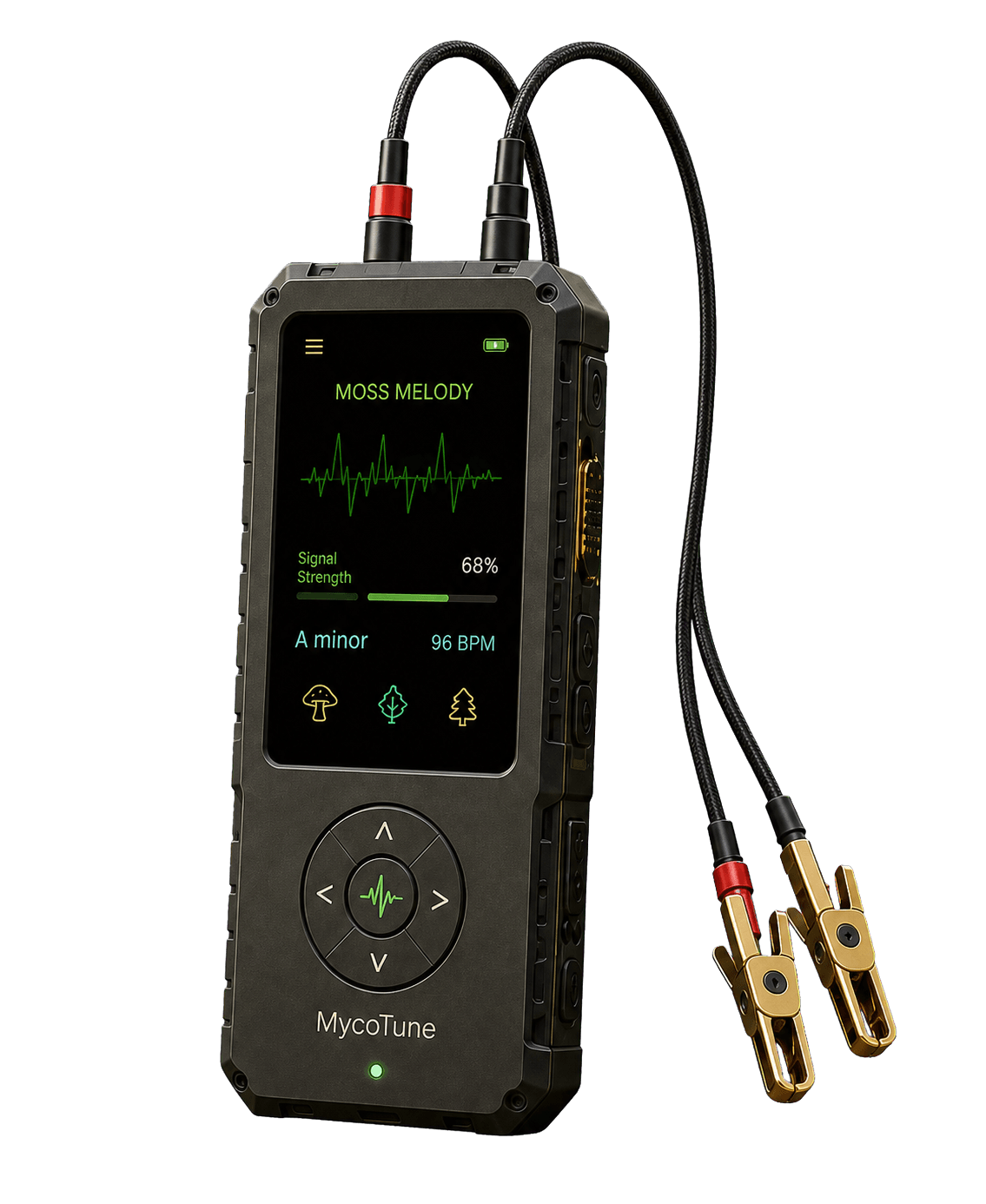
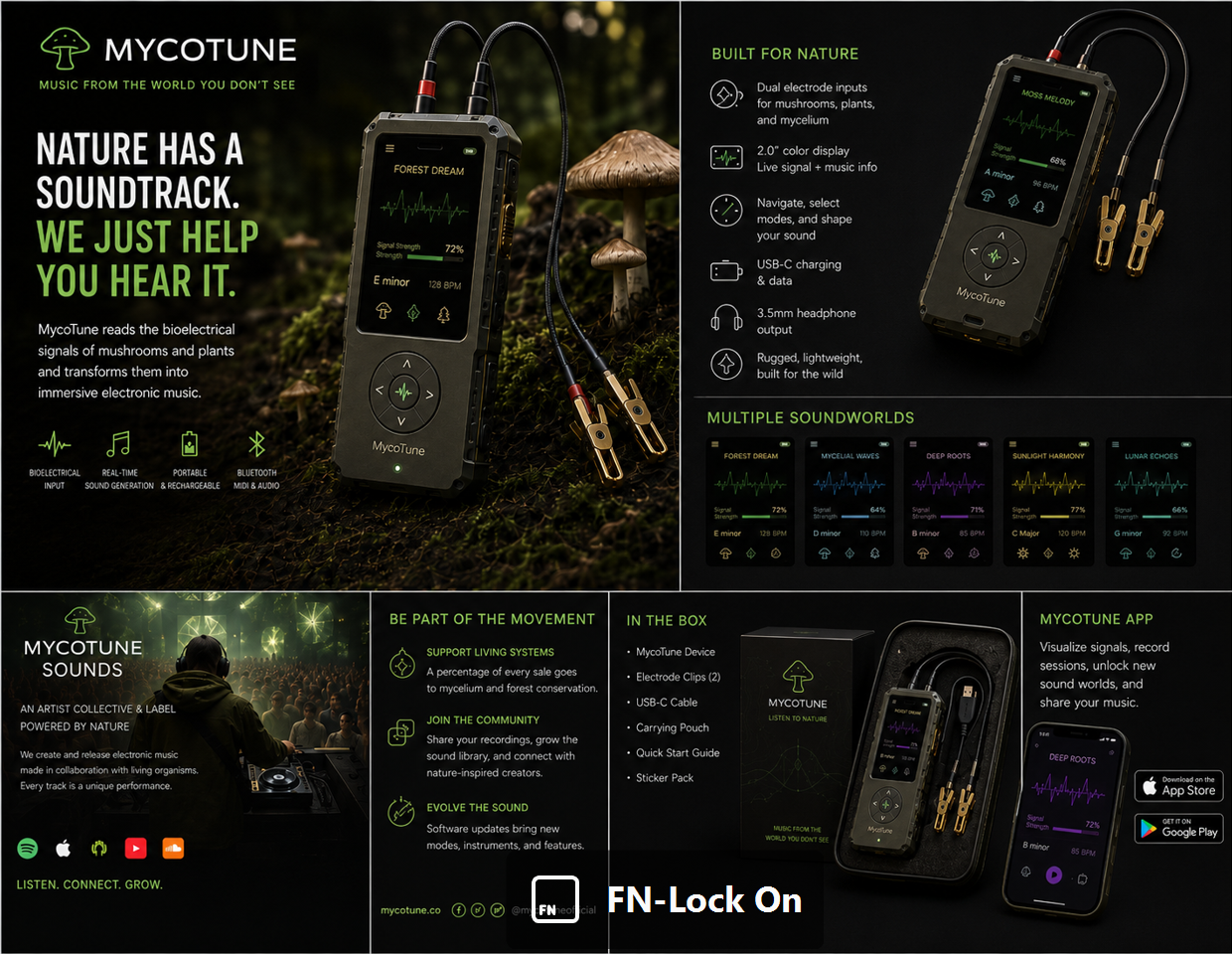
DEVICE CONCEPT / FRONT AND CENTER


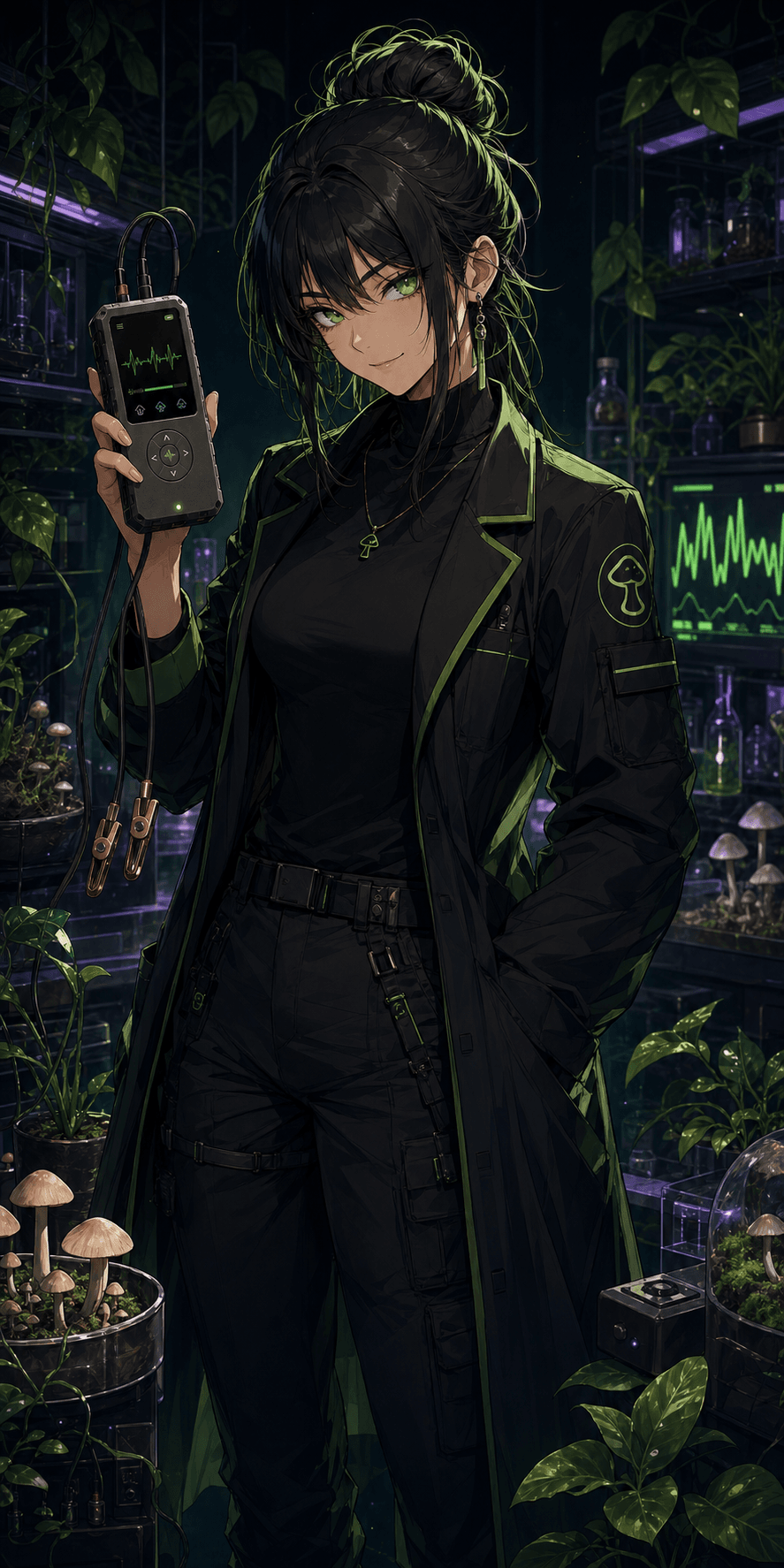
MEET MIKO / FIELD SIGNAL GUIDE
Miko is MycoTune’s lab guide: a calm, mischievous field scientist who loves honest data, weird mushrooms, clean notebooks, and signals that refuse to behave. She gives the project a human voice without pretending the squiggle means more than the measurement can support.

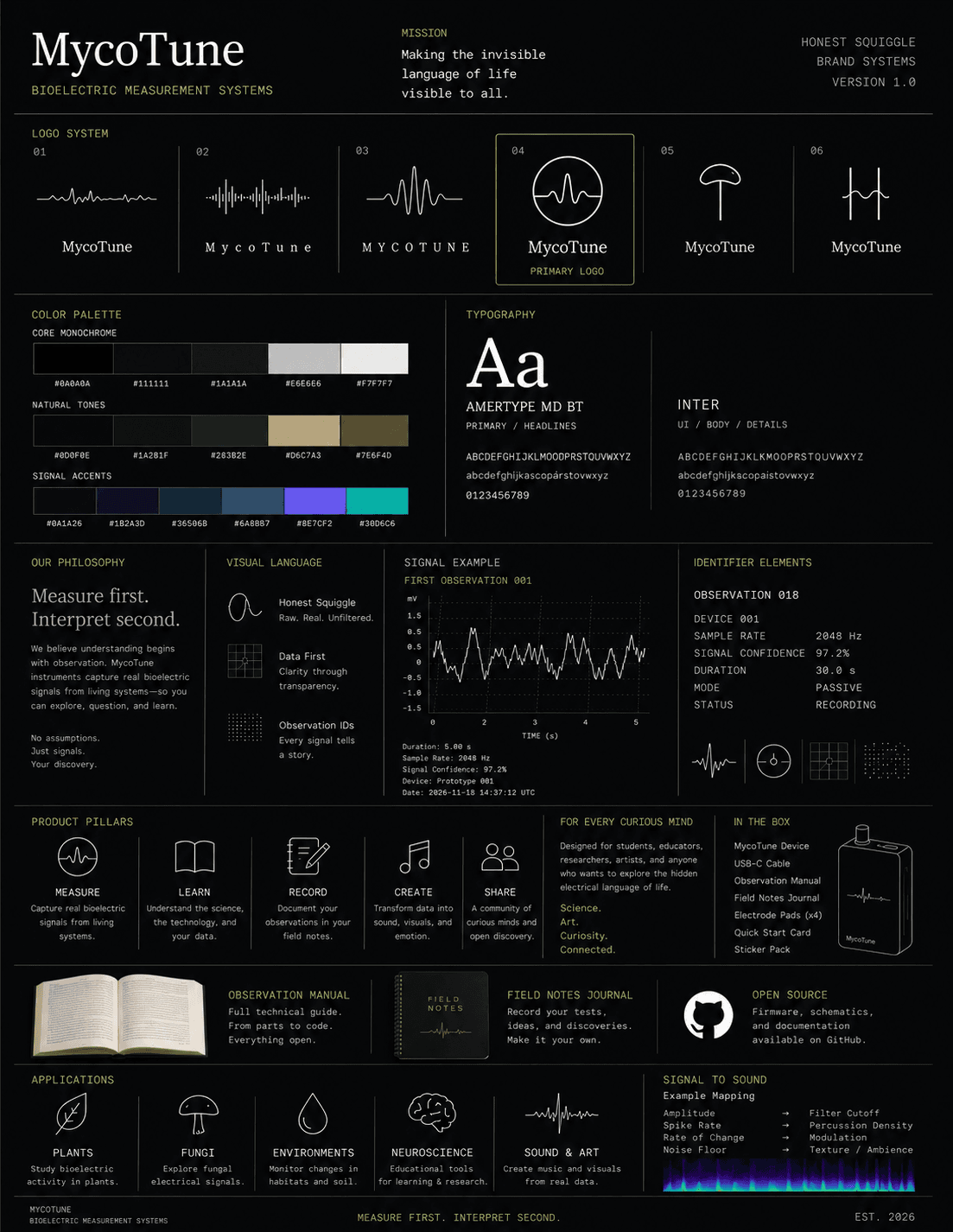
SYSTEM MAP / VERSION 1.0
The poster establishes the project’s measurement-first philosophy, transparent observation IDs, product pillars, applications, and signal-to-sound language.
OPEN FULL-SIZE POSTER ↗WHY THESE TWO COMPONENTS
Schedules sampling, talks to I²C devices through STEMMA QT, timestamps observations, drives the display, and moves field data over Wi‑Fi or native USB.
Turns a properly conditioned analog voltage between electrodes into digital samples with differential measurement and programmable gain.
PLANNED SIGNAL PATH
The ADS1115 does not receive raw electrodes directly. A safe, high-impedance analog front end must protect the converter, establish a valid bias, and control noise before digitization.
EXECUTION PLAN / CURRENT PROCESS
Place two electrodes on a plant, mushroom, or mycelial sample. Record the raw conditions before assigning meaning.
Protect, bias, and stabilize the small biological signal with a high-impedance analog front end.
Digitize the conditioned differential signal with the ADS1115 at a controlled gain and sample rate.
Use the ESP32-S2 Feather to timestamp, filter, visualize, save, and map the Honest Squiggle to sound.
Repeat the experiment, compare baselines, document noise, and publish the setup with the observation.

NEXT BENCH SESSION